- Home
- »
- When to Visit Tanzania?
When to Visit Tanzania?
The best time to visit Tanzania depends on what travellers want to see, which destinations they plan to visit, and the kind of safari they are interested in. You can experience a safari tour anytime of the year based on your preferences.
When to Visit Tanzania: Your Travel Guide
Here is your travel guide on the best time to visit Tanzania. Gather relevant information and plan your trip accordingly.
Best Months to Visit Tanzania: June to October & December to February
The months from June to October and from December to February are ideal for visiting Tanzania. In June, you can spot native wildlife in abundance amid pleasant weather, with a clear, sunny sky as a backdrop. The time is also most preferable to witness the Great Wildebeest Migration. Bird watching is another big plus if you want to go for a safari during these months.
June to October and December to February (Dry Season)
You can enjoy the best wildlife viewing during these months, as wild animals congregate around waterbodies. The weather remains pleasant. The breathtaking view of the wildlife migration mesmerises travellers in July and August. January and February are the best months to enjoy the calving season across the southern Serengeti.
March, April to May, and November (Rainy Season)
In March, rain begins. The vista looks vibrant with life. This time, fewer tourists visit the land for a safari experience. The package price also falls slightly because these months don’t fall under the ‘peak’ season. The panoramic view is spectacular, though you may often experience roadblocks. The forests, covered with greenery and blossoms, and the satisfying wildlife views please tourists with a rich safari experience.
Safari during the Dry Season: Pros and Cons
The dry season is considered the most popular among safari travellers to visit Tanzania. During these months, wildlife gathers around the waterholes, where you can enjoy abundant wildlife. The dry season is ideal for immersing yourself in Tanzania’s raw wilderness. You can enjoy the dramatic wildlife migration during this time. The dry months include January, February, and the months between June and late December. Let’s have some insights into the pros and cons of travelling during the dry season.
Pluses of a safari tour during the dry season
- Wild animals gather around the river and waterholes where they are easier to spot
- July and August are the best months to witness the wildebeest migration across the Serengeti and Mara River crossing.
- Southern parks are accessible only during the dry months.
- Safe road conditions
- More game drives
- Pleasant temperatures throughout the day
- Clear blue skies
- Fewer mosquitoes
- Ideal time to climb Mount Kilimanjaro
And here are the downsides of dry months, which you must consider –
- Safari tour packages are high in demand during the peak season
- Lesser chances to avail the accommodation options of your choice (the booking gets done really fast)
- National parks and accommodations are mostly crowded during the peak months.
Pros and Cons of Safari Tours during Rainy Months
Rainy months are also known as the green season. The season covers the months of March, April, May, November, and the beginning of December. The rainy months offer a different yet unmatched safari experience for travellers. Nature is all alive with its lush green forests and colourful blossoms. The landscape becomes green, covered in colours and vibrance. You can watch varied species of birds in the parks. The safari experience becomes more intimate during this time. The package rate is comparatively low compared to the peak months. Hence, some safari enthusiasts choose this season to keep their safari experience within budget. Depending on how you want to enjoy the safari in Tanzania, you can choose the best months.
The rainy season offers several benefits for safari travellers
- Nature looks bright and gorgeous, with lush green landscapes and fresh, blooming, colourful flowers.
- A stunning wildlife view in the northern parks.
- A good time for the bird watchers (don’t forget to carry your binoculars and camera)
- The lower package rate makes it an affordable safari option
- A lesser crowd in the parks allows the travellers to have a closer experience with nature.
Here are the downsides of the rainy season –
- Road blocks
- Mosquito attacks
- Showers in the afternoon
Low, Mid, and High Safari Season in Tanzania
The high season (January, February, June to October and December) in Tanzania offers pleasant weather and wide wildlife views. The sunny skies, moderate temperatures, and the fascinating view of the wildebeest migration make the months ideal for a safari. Consider the pros and cons of the high season before you plan your safari.
Pros:
- Pleasant weather conditions
- Stunning wildlife view
Cons:
- Crowd everywhere
- Costly tour packages
- Fewer chances of accommodations getting booked
The mid-season (March, November to December) creates a perfect balance between high and low season. During these months, safari tourists can enjoy comparatively fewer crowds and lower prices while experiencing abundant wildlife viewing amid moderate weather.
Pros:
- Lowering accommodation prices
- A smaller number of tourists than in the high season
Cons:
- Limited accessibility and availability
- Fluctuating weather
Budget-friendly travellers find the low season ideal because of the low package rate. Moreover, you can enjoy a calm, peaceful safari experience amid Tanzania’s scenic landscapes.
Pros:
- Low accommodation and package rates
- National parks remain less crowded
Cons:
- Closed accommodation options
- Heavy rainfall
Each season brings a unique side of Tanzania. From the high to the mid to the low, all seasons offer a memorable safari experience for safari enthusiasts.
Witness the Great Migration in Tanzania
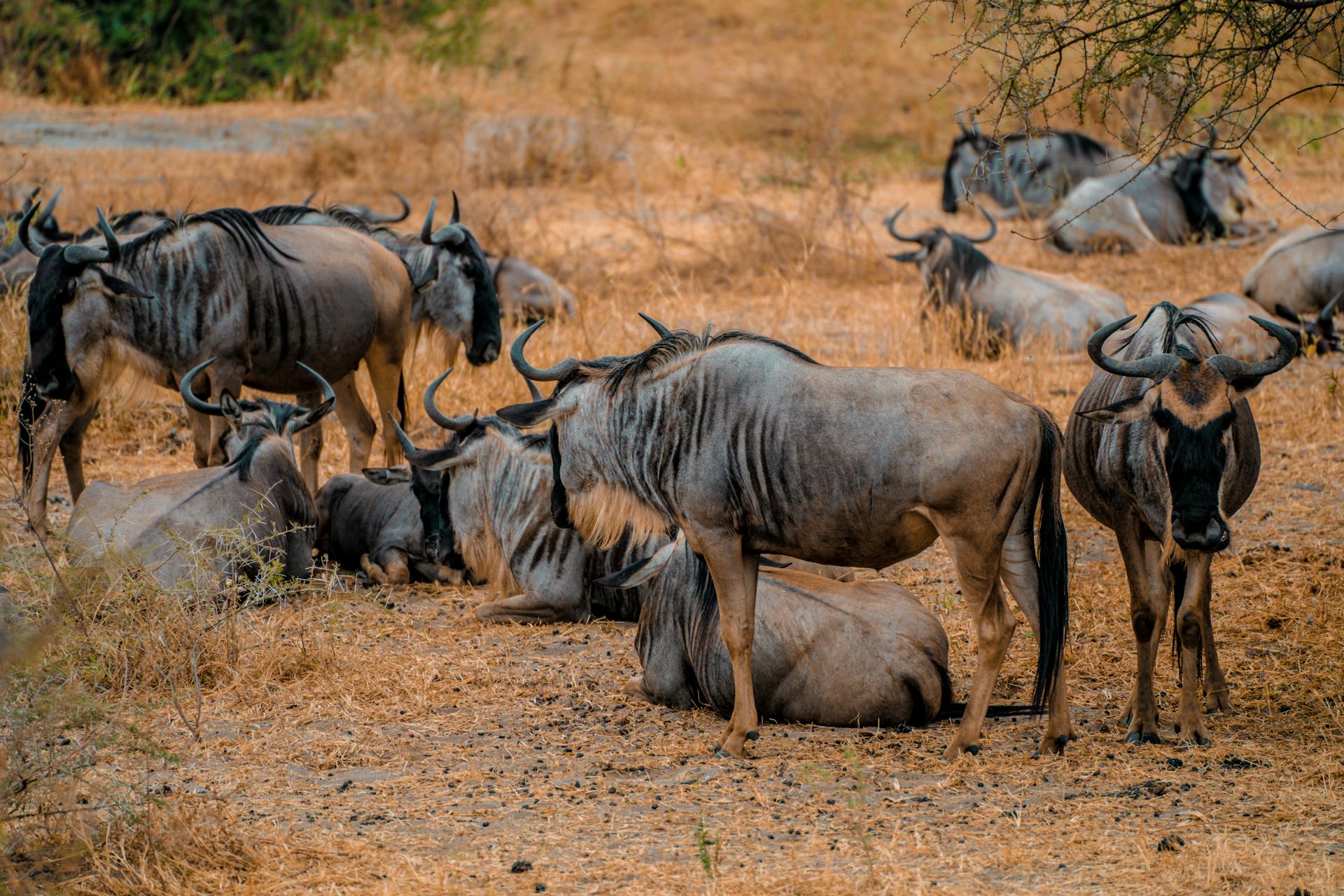
Witness the captivating sight of the Great Migration throughout the year in Tanzania’s Serengeti. Whenever you visit Tanzania, you won’t miss the sight of the Wildebeest Migration. Look into when and where you can see the migration in the country.
Southern Serengeti (December to March)
Watch the Great Migration in the Southern Serengeti during these months, when you can witness the pure sight of the newborns.
Northern Serengeti (July to September)
During these months, you can enjoy the view of the wildebeests migrating across the Mara River in the northern Serengeti.
Contact us to learn how to plan your trip based on wildebeest activities and migration.

FAQ
Read through the questions and answers, as these are among the most frequently asked by safari planners.
The best time to visit Tanzania is during the dry season, from June to October. You can enjoy nature in full bloom, with rich wildlife and pleasant temperatures. You can visit the Southern Serengeti during the calving season.
Months from June to October attract the largest number of tourists, thanks to their rich wildlife and pleasant weather.
April and May - the months bring heavy rain, causing road blocks and closing certain safari camps.
November to March are the green/wet seasons, when Tanzania boasts lush green landscapes and fewer crowds.
You can see the wild animals in abundance around the waterbodies, where they congregate to drink water during the dry seasons between late June and October.