- Home
- »
- Ngorongoro Conservation Area
Ngorongoro Conservation Area
History of Ngorongoro Conservation Area
About 2.5 million years ago, a volcanic eruption in the Ngorongoro Conservation Area formed massive calderas. Instead of creating a typical volcanic crater from an explosion, it formed a caldera, which is a large basin formed after the volcano’s summit caved in due to magma depletion beneath the surface. Ngorongoro Crater is the world’s largest intact caldera and has been a significant habitat for human and wildlife for over 1.75 million years. It was declared a UNESCO World Heritage Site in 1979, which led to its legal protection and the conservation of its natural ecosystems.
Famous Spots in Ngorongoro Conservation Area
The landscape of Ngorongoro Crater is a combination of lush vegetation, lakes, plains, and crater rims, and has hosted diverse wildlife for millions of years. The total area is about 8,292 sq km (3,202 sq. miles), about five times the size of London. There’s a lot to discover in and around this safari destination, amongst which you can explore these top places:
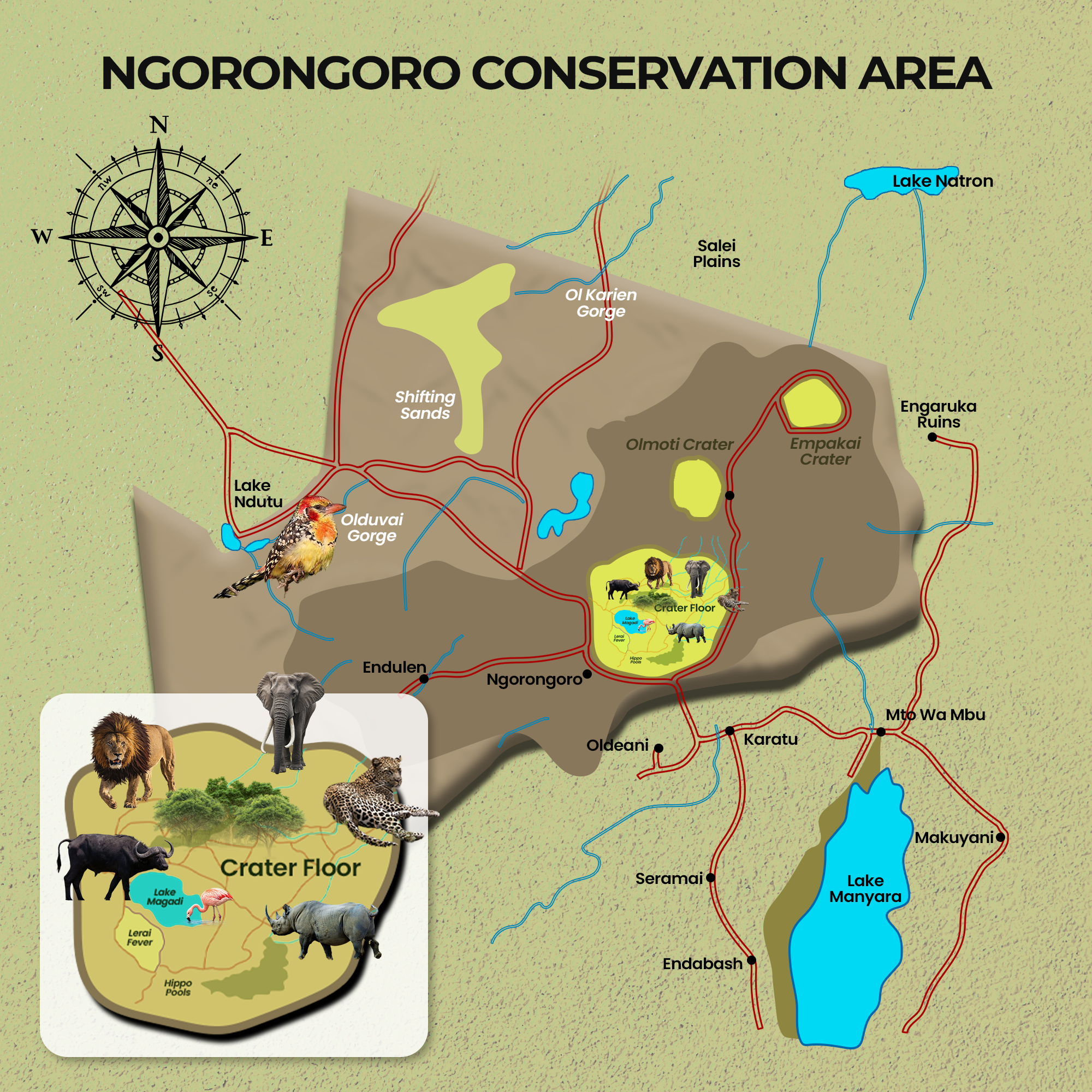
- Lake Natron: Famous as a breeding ground for lesser flamingos and one of the most beautiful lakes in Africa.
- Lake Magadi: This shallow soda lake is also home to breeding lesser flamingos and is perfect for birdwatching.
- Lake Ndutu: Located in the western region of the crater, this lake attracts a variety of animals and bird species.
- Heroes Point: A unique sight for spotting a large number of elephants, wildebeest and zebras running across the surroundings.
- Olduvai Gorge: Known as the Cradle of Mankind, this is one of humanity's most significant prehistoric sites.
- Crater Points: The Empakaai and Olmoti craters are famous for wildlife viewing, and the Munge Waterfall, located at the centre of the crater floor, is small.
- Gol Mountains: This series of ridges rises from the short grass plains near the Northern Edge of the Ngorongoro Crater.
Wildlife in Ngorongoro Conservation Area
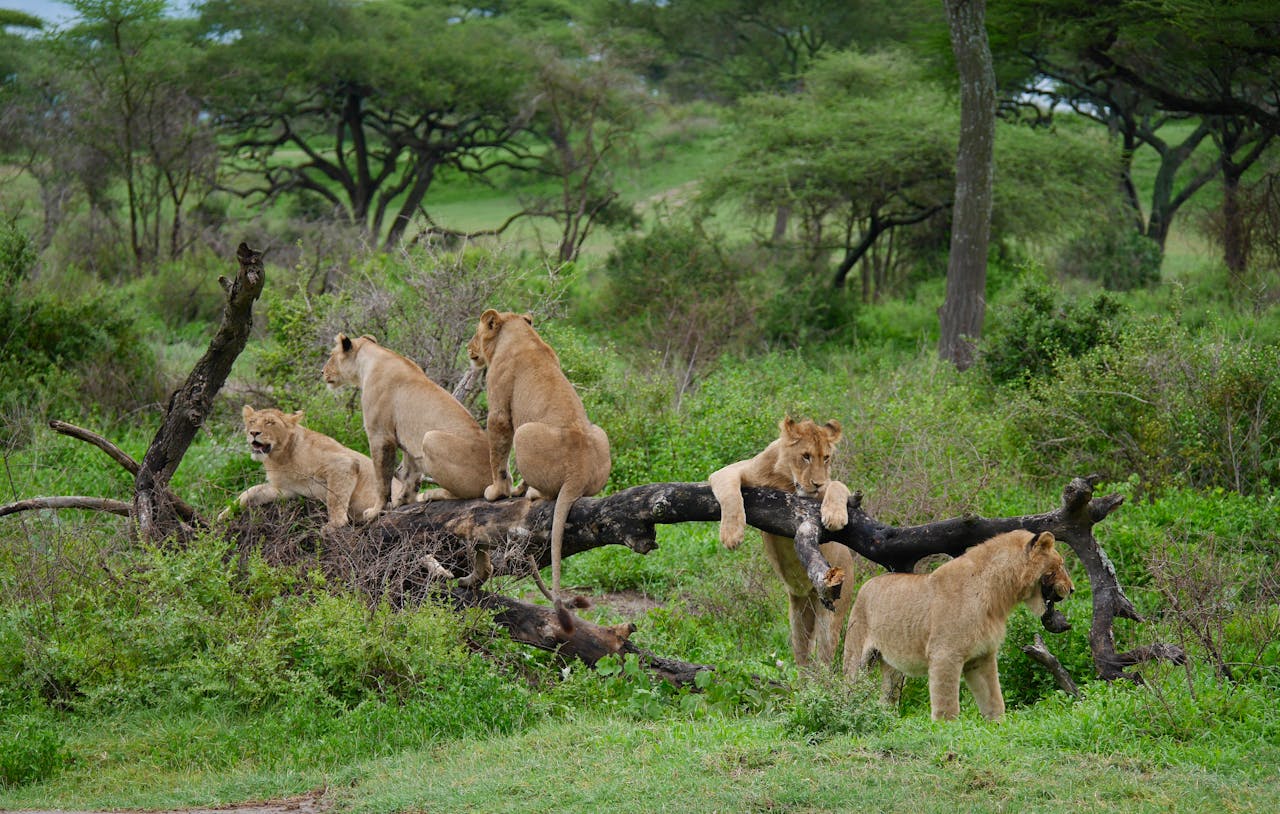
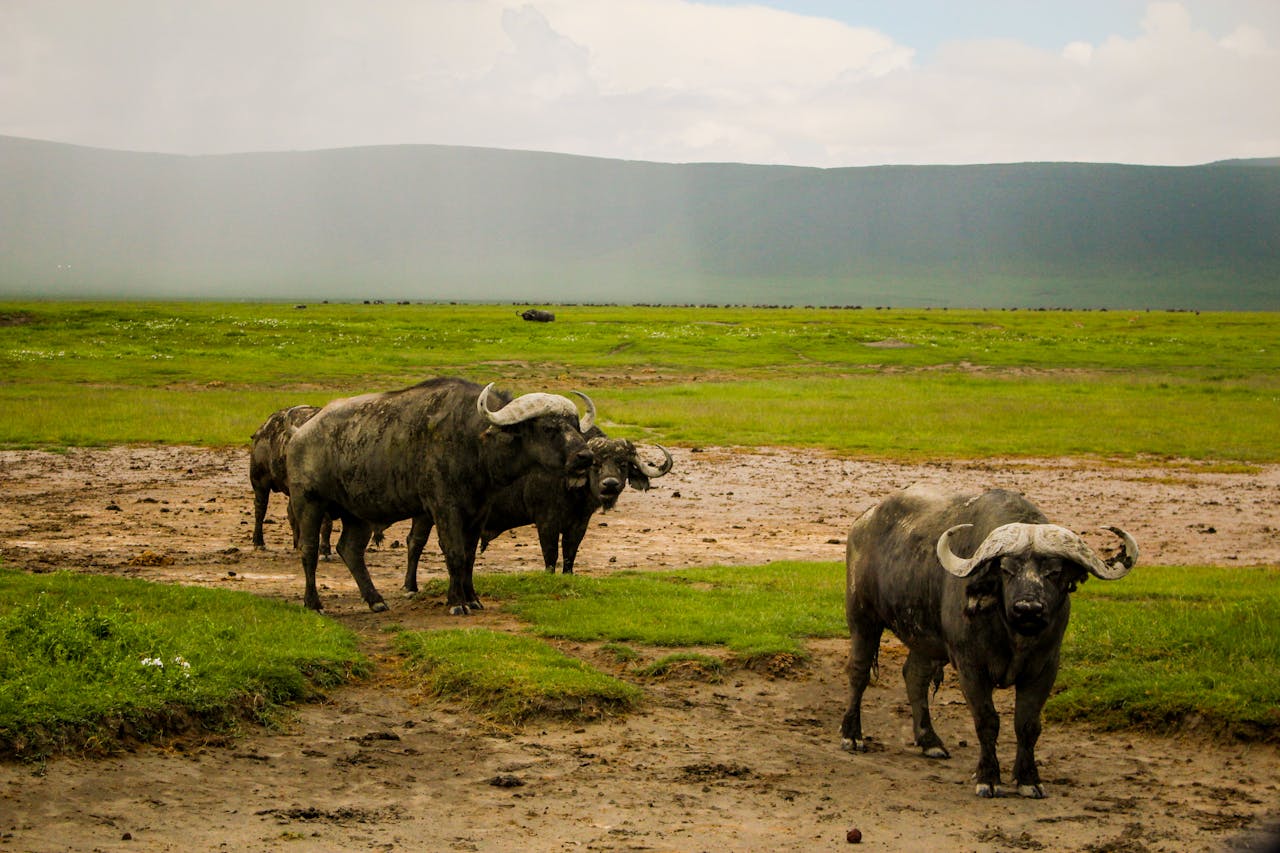
Ngorongoro Crater is home to the highest concentration of wildlife in Africa. The main attraction of this safari destination is The Big Five (lions, elephants, leopards, rhinos, and buffalo), along with diverse animal and bird species. Most of the animals can be spotted within 20 km (12).5 miles) wide and 600-metre (2,000 feet) deep crater. Indigenous African species such as Giraffes are not found in this region because they cannot navigate the steep walls of the crater, and the tall trees on which they feed are very scarce.
Apart from the Big Five, Ngorongoro Crater hosts notable animal species that can be categorized as:
- Large Mammals: Large mammal species include African Civets, Caracals, Baboons, Hippos and Serval Cats.
- Ungulates: Grant’s gazelles, Gnus, Mountain Reedbacks, Elnads and Hartebeest.
- Predators: Cheetahs, African wild dogs, Spotted Hyenas, Bat-eared Foxes, Black-Haired and Golden Jackals.
- Birdlife: Over 550 bird species inhabit this region, including various hornbill and turaco species.
Activities in Ngorongoro Conservation Area
Few Tanzanian destinations are blessed with the rich biodiversity of Ngorongoro Crater, making it one of the top safari tourist spots in Africa. At Tanzania Adventures and Safaris, we provide our guests with the following popular safari activities:
- Game Drives (Day Time): Spot the Big Five and other wildlife while travelling in a 4x4 safari vehicle, accompanied by an experienced safari guide/driver.
- Nature Walks: Walk through protected areas with an experienced safari guide to immerse yourself in nature up close.
- Cultural Tours: Go on cultural excursions to nearby Maasai villages to learn about traditional community practices and way of living.
- Birding and Photography Safaris: Capture stunning sunrises and sunsets along with the natural habitats of over 550 bird species.
- Crater Floor Picnics and Luxury Dining: Get an unmatched safari experience in crater floor picnics along with luxury dining at the crater rims.
What Makes Ngorongoro Conservation Area Unique?
Ngorongoro Crater is the world’s largest intact volcanic caldera, standing as a natural enclosure for wildlife from the outside world. It looks like a natural amphitheatre, home to a year-round population of wildlife. You might wonder, how did animals go to the volcanic caldera then? For over 2 to 3 million years, animals from adjoining regions gradually migrated to a safer, more sheltered location. Once they arrived, various species began to settle in different regions of the crater.
The beautiful co-existence of human and wildlife makes this region a unique conservation area in Tanzania. Ngorongoro Conservation Area are one of the few places in Africa, where the Maasai community lives and practices pastoralism alongside protected wildlife zones. Recognised both for its cultural and natural significance, this safari destination is protected as a mixed heritage site.
Visiting Ngorongoro Crater offers tourists a marvellous view from the rims, where one can have bush picnics. On our premium and luxury tours, you can enjoy personalised service for dining and breakfast. Mid-range and luxury accommodations situated near the crater rims offer panoramic views of the natural amphitheatre.
Ngorongoro Conservation Area
Visit this awesome safari destination for your Tanzanian adventure.
Tour Highlights
- World’s largest intact volcanic caldera
- Dense wildlife population
- Big Five in one location
- Stunning crater views
- Year-round game viewing
- Rhino sightings
- Scenic crater floor drives
- UNESCO World Heritage Site
- Maasai cultural presence
- Compact yet rich ecosystem
Timing and Travel to Ngorongoro Conservation Area
FAQ
There are two versions regarding the origin of the name Ngorongoro. The first version tells that it is derived from the Maasai term “El-Nkoronkorro”, known as the “Gift of Life”. The second version tells the story of the Maasai people naming the crater after the sound their cattle's bells made. From the “nkor-nkor" sound, the name of “El-Nkoronkorro” was derived.
Ngorongoro Conservation Area can be explored in a single-day trip. For a better experience, a span of 2 days is recommended, which may vary as per trio requests and climatic conditions.
Several tribal people live near the Ngorongoro Conservation Area. The most prominent among them is the Maasai community.
Filming with drones in Ngorongoro is prohibited. Permission for drone filming is granted only for projects that benefit the Conservation Area, typically given to wildlife documentary crews and, occasionally, large tourism media projects.
Currently, about 50-60 black rhinos inhabit the Ngorongoro Conservation Area. The crater serves as a safe haven for wildlife, with 24/7 monitoring to prevent poaching and other illegal activities.